
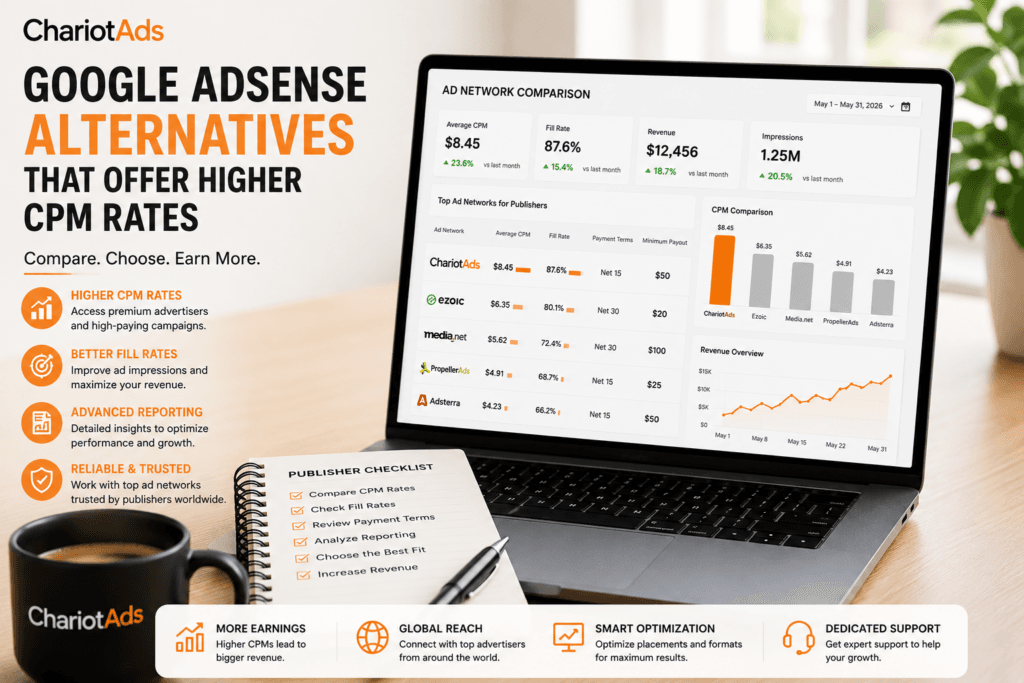
For many publishers, AdSense is the first monetization tool they try because it is familiar and easy to recognize. But as a website grows, relying on one platform can limit flexibility. Different audiences, traffic sources, countries, and page types can produce very different advertising results, so publishers often begin exploring Google AdSense alternatives that give them more control over formats, demand, and earnings. The goal is not to replace a platform for the sake of change. A better decision comes from comparing fill rates, reporting, payment terms, advertiser quality, and the effect ads have on visitors before moving traffic elsewhere.
Look Past the Headline CPM Number
A high CPM can sound impressive, but it does not tell the whole story. Publishers should ask how often that rate is actually available and whether enough advertiser demand exists for their audience. The best AdSense alternative is usually the one that delivers steady value across real traffic, not the one that advertises the largest possible number.
A platform with slightly lower peak rates may still earn more if it fills more inventory consistently. Geography, device type, content category, season, viewability, and user engagement can all influence the final return from every thousand impressions.
Build Revenue Around More Than One Format
Websites do not all behave the same way, which is why a single ad type can become restrictive. Strong publisher monetization often comes from matching formats to the way people use a page. A long article may suit banners or native placements, while another page may perform differently with interstitial or pop-under inventory where appropriate.
The important point is balance. Adding more ad units does not automatically create more income. Publishers should test one change at a time, check how visitors react, and keep content easy to read. Revenue should grow because placements are useful, not because every open space has been filled.
Judge Ads by User Experience as Well as Earnings
Good display advertising should remain visible without making the page feel crowded or difficult to navigate. If a placement pushes content too far down, slows loading, or interrupts mobile browsing, the extra short-term revenue may come at the cost of repeat visits.
Publishers should watch revenue and audience signals when testing a new network. Useful checks include:
- Fill rate by page
- CPM by country
- Page speed
- Bounce rate
- Payment clarity
Clear reporting should show publishers why revenue changes instead of leaving them to guess.
Traffic Quality Can Matter More Than Traffic Volume
A website ad network can only monetize the inventory it receives, and the quality of that inventory affects advertiser interest. Ten thousand engaged readers may be more valuable than a larger number of short, low-intent visits. Publishers need to follow where traffic is coming from, how long users stay, and if visits seem authentic.
Anti-fraud controls matter because advertisers want confidence that impressions come from real users. Clean traffic sources and sensible placements can support stronger demand while helping publishers avoid volume that brings little commercial value.
Compare the Business Side Before You Switch
The strength of CPM ads depends on more than the rate shown in a dashboard. Payment schedules, minimum thresholds, support availability, accepted traffic sources, reporting depth, and account controls can all affect whether a network is practical for daily use. Before moving a large share of inventory, publishers can test a smaller portion first. Compare revenue over several weeks, not several hours, and separate mobile, desktop, country, and content-category performance. This gives a clearer picture of what actually changed. It also makes it easier to compare several Google AdSense alternatives without risking the entire site’s income at once.
A useful test should answer simple questions: Did overall revenue improve? Did fill remain consistent? Were ads relevant enough for the audience? Did page speed stay acceptable? Was support easy to reach? These answers matter more than a promotional CPM claim because they reveal how a platform performs under normal publishing conditions. Publishers should also remember that a stronger monetization partner should make growth easier to manage. Better reporting, flexible formats, and dependable support can turn publisher monetization into a repeatable process rather than a series of experiments with no clear direction.
Conclusion
Publishers looking beyond AdSense should compare platforms on consistent demand, usable formats, traffic quality controls, reporting, support, and payment reliability instead of choosing on rate alone. ChariotAds fits into this wider approach by connecting publishers and advertisers through CPC and CPM campaigns, and it also supports display banners, native ads, interstitials, and pop-under formats. The platform also offers anti-fraud technology, a dedicated dashboard, account management, and reliable payout schedules. And for website owners looking for more flexibility, ChariotAds provides a structured way to test inventory, know what works, and build revenue around real traffic instead of relying on a single advertising source as the audience grows.