
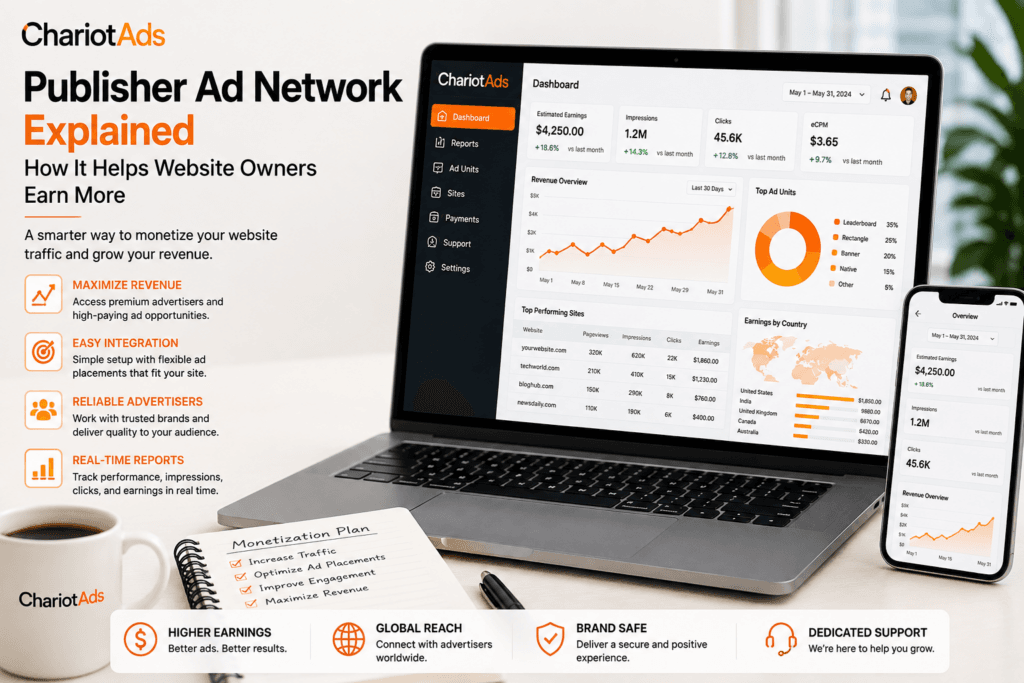
A website may have loyal readers, useful articles, and growing traffic without producing dependable income. The missing piece is often a clear system for turning available page space into advertising opportunities. For owners exploring ad networks for publishers, the value lies in reaching advertisers without spending every week negotiating individual deals, collecting creative files, and chasing payments. A network can organize much of that process in one place. It helps publishers make unused inventory productive while keeping attention on publishing, audience growth, and site quality. The goal is not simply to show more ads, but to make each placement work.
The Simple Exchange Behind Online Ad Revenue
Every advertising impression begins with two sides. A website owner has space that can carry a message, while an advertiser wants access to people who may be interested in an offer. A publisher ad network connects those needs by matching available inventory with campaigns that fit its supply and demand.
That connection can remove a lot of routine work from the publisher. Instead of contacting brands separately, the site can receive campaigns through one network, monitor activity from a dashboard, and follow a defined payment process. This is especially useful for owners who want advertising income without building an in-house sales operation.
Why Direct Ad Sales Are Not the Only Option
Selling advertising directly can provide control, but it also creates extra responsibility. An advertising network for websites can reduce this workload. Without one, a publisher may need to find buyers, discuss rates, manage campaign dates, collect creative assets, check delivery, and handle invoices independently.
The network does not replace good publishing decisions. Website owners still need to protect reading flow, speed, and trust. A page packed with distracting placements may earn briefly but lose repeat visitors. Sustainable income comes from choosing sensible locations and giving useful content enough room to remain the main reason people visit.
Traffic Quality Changes What Inventory Is Worth
A website monetization platform can help publishers see why equal traffic does not always create equal revenue. Geography, device use, session depth, content category, repeat visits, and advertiser demand can influence the value of an impression.
A smaller audience that reads several pages may create more useful inventory than a larger audience that exits quickly. Publishers should study where visitors come from, which pages hold attention, and which placements perform without hurting engagement. This makes revenue decisions easier to connect with real visitor behavior instead of assuming that every thousand visits have the same commercial value.
Ad Formats Should Match the Page, Not Fight It
A publisher advertising platform that supports several formats gives site owners room to match advertising with the page instead of forcing one layout everywhere. A long article has natural breaks, a news page needs quick scanning, and a visual page may have limited room around images. Common choices can include banners, native placements, interstitials, or pop-under formats where appropriate. Publishers should compare more than immediate earnings. Bounce rate, page speed, mobile behavior, and repeat visits matter as well. The strongest setup is usually one visitors can navigate comfortably while ads remain visible enough to create commercial value.
What to Check Before Choosing a Monetization Partner
When comparing a display ad network, publishers should look beyond a headline rate and examine how the service works. Clear reporting, dependable payouts, relevant advertiser demand, fraud controls, and responsive support can matter just as much as the number of available campaigns.
Before joining, review:
- Whether the available ad formats suit your pages and audience.
- How clearly the dashboard reports impressions, clicks, and earnings.
- When payments are issued and which payout rules apply.
- What measures are used to identify suspicious or invalid traffic.
- How quickly publisher support responds when account questions appear.
Which traffic sources and publisher categories the network accepts.
Ad networks for publishers should be compared on practical value rather than promises alone. The best fit should support revenue without forcing a site to sacrifice usability or audience trust. Publishers can also begin with a limited number of placements, compare results by page and device over several weeks, and expand only when performance justifies it. A gradual approach makes it easier to tell whether revenue improved because a placement was genuinely effective or simply because more ads appeared.
A website monetization platform should make changing traffic patterns easier to notice. A setup that performs well on desktop may behave differently on mobile, while one content category may attract stronger demand than another. Regular reviews give publishers evidence for future changes instead of leaving revenue decisions to guesswork.
Conclusion
Earning more from a website is less about filling every empty space and more about connecting good inventory with suitable demand. ChariotAds supports that process by linking publishers and advertisers through CPC and CPM models and offering display banners, native ads, interstitials, and pop-unders. For owners evaluating a publisher ad network, the platform also highlights anti-fraud protection, a dedicated dashboard, account management, and reliable payout schedules. ChariotAds gives publishers a structured route for turning traffic into advertising opportunities while providing tools to monitor performance, manage inventory, and build a consistent monetization approach as audience and revenue goals grow.