
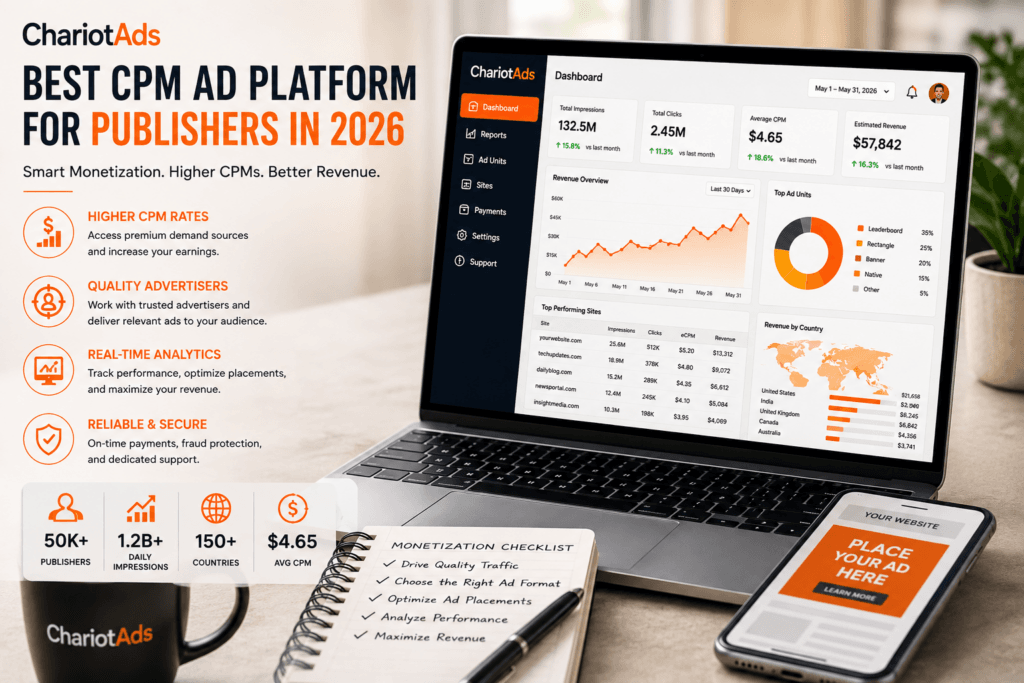
Choosing a CPM platform in 2026 is no longer about finding the biggest number on a rate card. Publishers need to understand where that rate comes from, how consistently inventory is filled, and whether the ads fit the audience. A high CPM ad network can look attractive, but the real value appears when strong demand, useful reporting, and a good visitor experience work together. For website owners, the approach today is to compare revenue quality rather than chase a headline figure. Stable earnings usually come from relevant advertisers, clean traffic, sensible placements, and testing across devices, pages, and audience segments.
CPM Revenue Starts With the Value of Each Impression
CPM means cost per thousand impressions, so publishers earn according to how often an ad is served rather than depending only on clicks. The highest CPM ads depend heavily on audience quality, advertiser demand, and inventory that appears where it can genuinely be seen. A site with loyal readers can therefore outperform one with more visits but weak engagement. Publishers should study geography, device type, viewability, session depth, and content category before assuming that every thousand impressions has the same commercial value.
Rate Alone Does Not Tell the Whole Revenue Story
A promising rate is useful only when enough campaigns are available to fill the space. This is why a premium ad network should be judged on both CPM potential and demand consistency. A placement that shows an impressive rate but remains empty too often may earn less overall than inventory with a slightly lower rate and steadier fill. Publishers should also consider how well advertiser demand matches their audience. Relevant campaigns can support better performance, stronger advertiser confidence, and more dependable earning opportunities without forcing additional ad units into the page.
Page Type Should Shape the Advertising Setup
A CPM advertising network needs enough flexibility to match the way different pages are used. A long article, homepage, gallery, news update, and mobile page do not offer the same reading experience. Applying one format everywhere may weaken both revenue and Affiliate Marketing usability.
Publishers should test placements individually and compare:
- Viewability and fill rate
- Desktop and mobile results
- Revenue by content type
- Bounce rate after changes
- Repeat visits and session depth
These comparisons reveal which placements add value instead of simply increasing the amount of advertising visitors see.
Good Reporting Turns Revenue Into Something Publishers Can Improve
A reliable CPM ad platform should make performance understandable rather than burying publishers in numbers. Clear reporting on impressions, earnings, traffic patterns, and placement results lets website owners see what’s working and what needs adjustment. A good month of revenue can be hard to explain or repeat without useful data. Publishers should compare trends rather than judge performance from one busy day. Variables that can affect results include geography, device mix, content topic, advertiser demand, and seasonal activity. Reviewing those differences regularly creates a stronger basis for changing placements.
Higher Earnings Begin With Better Traffic, Not More Ad Clutter
Finding a high paying ad network does not remove the need to maintain a healthy website. Advertisers value traffic that is genuine, engaged, and useful. Publishers can strengthen that value by improving page speed, navigation, internal linking, mobile usability, and content quality alongside their monetization plan. Traffic quality is just as important. Suspicious activity, deceptive placements, or weak acquisition sources can reduce advertiser confidence. Publishers should be focusing on legitimate visits, useful sessions, and ad positions that are still noticeable without dominating the page. That gives a better base for long-term demand.
The best high CPM ad network relationship should also protect audience trust. Too many intrusive placements may create short-term impressions while reducing return visits. A measured approach gives content enough room to remain the main reason people stay, while still allowing available inventory to generate revenue.
Conclusion
The best CPM option for 2026 will be competitive pricing, consistent demand, flexible formats, valuable reporting, and strong traffic-quality controls. This model is powered by ChariotAds, providing CPM and CPC campaigns to publishers and advertisers with display banners, native ads, interstitials, and pop-under formats. Its platform also includes anti-fraud technology, publisher monetization, a dashboard, account management, and reliable payout schedules. ChariotAds offers a structured way for publishers to compare revenue partners and monetize impressions while maintaining visibility into campaign performance. Its CPM ad platform approach can help grow revenue with monetization manageable and audience experience in view over time.